


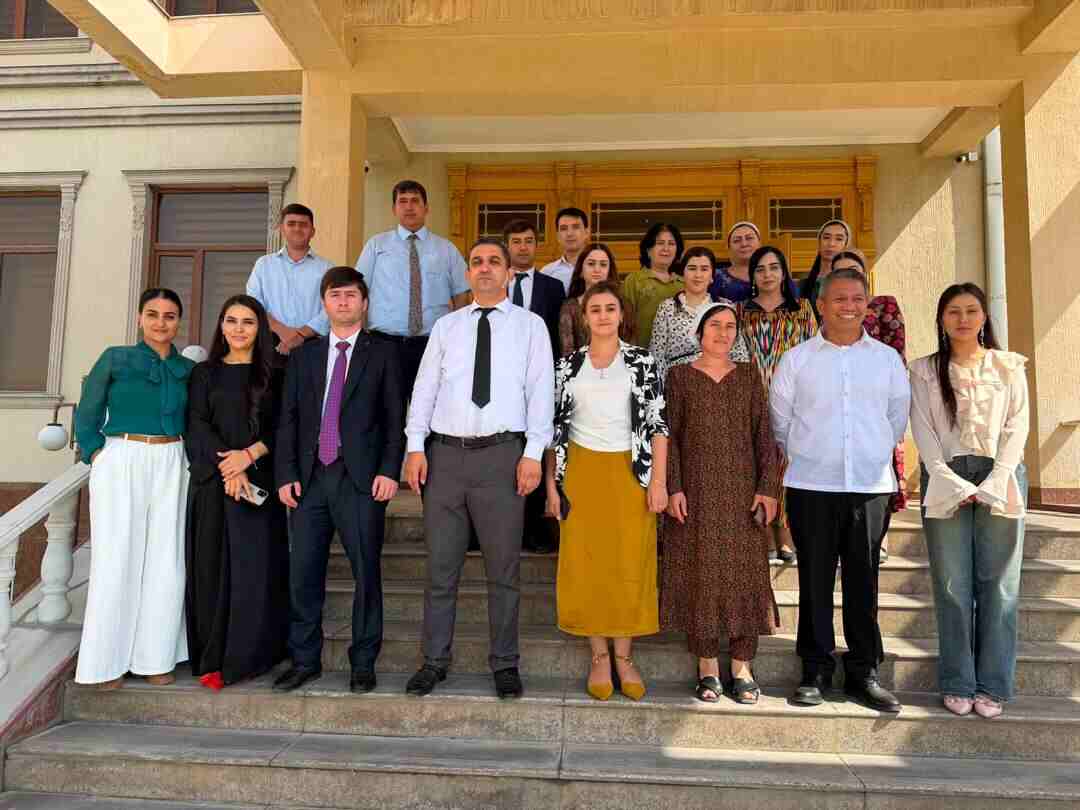
Tajikistan’s journey toward a proactive, disaster risk reduction and resilience framework reached a powerful milestone with the execution of specialized learning workshops focused on disaster risk management and climate change-related gender and sex-disaggregated statistics. Held on July 28, 2026, at the Republican Training Center in Dushanbe under the National Disaster Risk Management Project, Grant 0865-TAJ, the sessions united a total of 23 participants—including 14 dedicated delegates from the Statistics Agency alongside representatives from the Committee of Emergency Situations and Civil Defense (CESCD) Program Implementation Group (PIG) and technical support from Eptisa. This convergence of institutional minds is transforming how the nation envisions resilience, shifting the paradigm from reactive emergency response to strategic, data-driven foresight.
At the heart of this transformation is the Disaster Management Information System (DMIS), managed by the CESCD. These workshops served as a vital bridge, connecting frontline data collection at emergency sites directly with high-level national policy and reporting. Guided by a comprehensive communication framework spanning source, information, channel, receiver, effect, and feedback, participants explored how to hardwire social and gender-based indicators into the national data architecture. By embedding variables of sex, age, disability, and socioeconomic disaster risk directly into reporting systems, the initiative ensures that no community member remains invisible when disaster strikes.
To turn these high-level concepts into frontline reality, participants rolled up their sleeves and utilized the Gap Mapping Matrix to critically dissect the entire disaster and resilience data information lifecycle. Across breakout groups, attendees examined current operational realities, pinpointed technological and procedural bottlenecks, and mapped out collaborative opportunities. They evaluated who captures data on the ground, scrutinized whether the DMIS interface seamlessly captures "differential risk" variables such as specific hazards, elements at risk, locations, and time, and ensured that data formats meet the rigorous planning needs of the Statistics Agency. Crucially, the exercise emphasized establishing formal feedback and validation loops—enabling the Statistics Agency to guide the CESCD on data quality and utility—culminating in clear priority roadmaps aligned with the National Action Plan for 2026–2028. Within this strategic framework, the advanced paradigm of differential risk data was formally imparted as a key operational direction for the Statistics Agency's active consideration, ensuring future datasets are precisely tailored for high-level, risk-informed governance.
The resonance of these workshops extended far beyond technical matrices, sparking deep inspiration and professional synergy among attendees. Statistics Agency participant Zokirova O.R. underscored the immense value of integrating gender perspectives into disaster risk management and climate change, while Jumaeva Tamiris commended the approachable delivery of complex methodologies that fostered lasting cross-organizational connections. Participants repeatedly voiced a shared appreciation for learning cutting-edge international standards that directly safeguard daily human lives. This collective enthusiasm culminated in a strong call for expanded future training cohorts and extended multi-day formats, reflecting an unwavering institutional appetite for continuous growth.
Ultimately, through the eyes of the participants, these workshops were more than a technical exercise—they were a profound eye-opener that revealed new dimensions of safety, human disaster risk, and shared purpose. Carrying forward the valuable knowledge gained from international experts and peers, the attendees stand unified in their vision: eager to apply these insights to their daily work, deeply committed to expanding such life-saving dialogues to reach even more colleagues, and fully inspired to turn local risk intelligence into a resilient future for every community in Tajikistan.
#DisasterRiskReduction #ClimateResilience #GenderStatistics #DataForGood #Tajikistan #CESCD #StatisticsAgency #Eptisa #DRM #SustainableDevelopment #ResilienceEcosystem


